
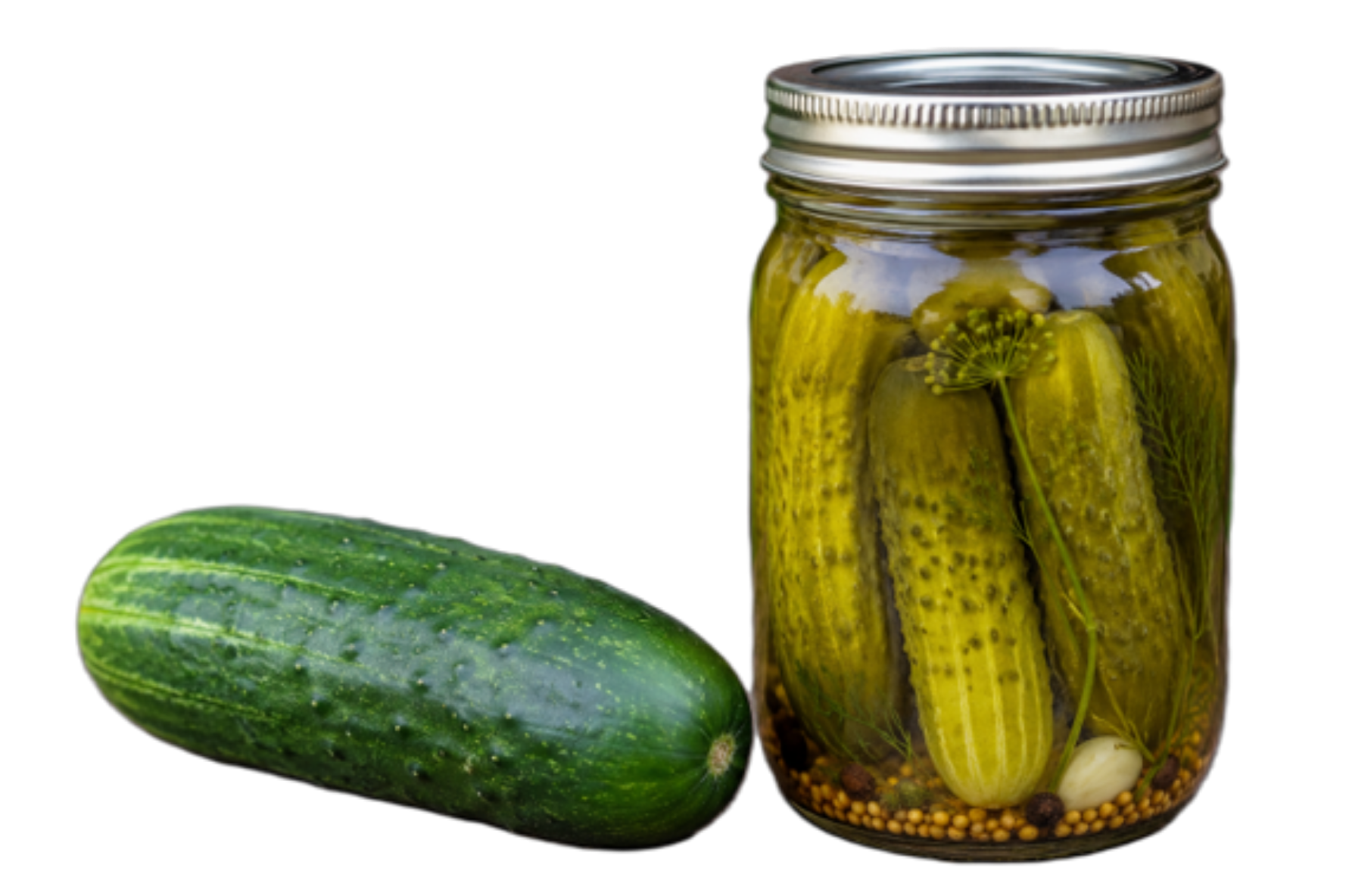
The Hidden Costs of Not Trusting A Pickle In Missouri
What Does It Take to Trust a Pickle?
A cucumber can feed a family. A pickle can build a business.
Missouri allows certain foods to be produced in home kitchens and sold directly to consumers under its cottage food framework. Pickles do not fall within that statutory definition.
That distinction may sound small. For a local producer, it can mean the difference between having a product people want and having a realistic pathway to sell it.
“A cucumber can feed a family. A pickle can feed a business.”
Missouri allows certain value added foods to be produced in home kitchens and sold directly to consumers under its cottage food framework. Pickles made at home in the Show-Me State, however, do not fall within the cottage food statutory definition.
That distinction may sound small. For a local producer, it can mean the difference between having a product people want and having a realistic pathway to sell it.
This is not an argument against food safety.
It is a question about whether Missouri can protect consumers and create reasonable pathways for small food producers to participate in the local economy.
That is why GOTURSIX keeps talking about the pickle…it’s even on our business card.
The Pickle Problem
Missouri’s cottage food law creates a home-production pathway for a limited set of foods, including baked goods, canned jams and jellies, and dried herbs. Pickles are excluded from that pathway. Most shelf-stable pickled products instead fall under Missouri’s acidified food requirements, which carry additional food-safety requirements for commercial production.Missouri statute defines a cottage food production operation around a limited set of products, including baked goods, canned jams and jellies, and dried herbs and herb mixes. Pickles are not included. Missouri r separately because improperly processed products can create serious food-safety risks.
For a producer, that creates a very different pathway:
PRODUCER → PRODUCT → REGULATION → BARRIER → ECONOMIC CONSEQUENCE
A cucumber can be grown locally and sold directly.
Turn that cucumber into a shelf-stable pickle, and the regulatory requirements change.
The question is not whether those risks deserve attention.
The question is whether the pathway for managing that risk is proportionate to the size and scale of the producer.
That is where food safety becomes an economic mobility issue.
Our Food System Is Already Showing Us Its Fragility
The pickle conversation is happening inside a much larger food system.
This summer offered a powerful example.
FDA and CDC linked a major multistate Cyclospora outbreak to iceberg lettuce processed by Taylor Farms de Mexico. By the end of the outbreak, federal investigators reported 12,883 illnesses, 570 hospitalizations, and two deaths across 21 states, including Missouri.
Missouri was not a minor footnote. CDC’s final outbreak map places the state in the range of 1,001 to 2,500 reported illnesses associated with the outbreak.
That does not mean commercially produced lettuce is unsafe.
It means something more useful:
Scale does not eliminate vulnerability.
Large supply chains can move enormous quantities of food efficiently. They can also move a problem across multiple states.
Local food systems have different risks and require their own safeguards. But strengthening local production, processing, and market access gives communities more ways to feed themselves instead of depending entirely on distant supply chains.
Food Access Is Facing Pressure Too
There is another change approaching Missouri’s food system.
Beginning October 1, 2026, the federal government’s share of SNAP administrative costs falls from 50% to 25%. Missouri’s share rises to 75%.
That change does not directly reduce a household’s SNAP allotment on October 1.
But it places substantially more responsibility for administering one of the nation’s major food-access programs onto the state.
And beginning October 1, 2027, states with SNAP payment error rates above 6% can also become responsible for a portion of actual SNAP benefit costs.
Those changes are another reason to think seriously about resilience.
Food access cannot depend on one intervention.
It depends on households being able to afford food.
It depends on retailers being available.
It depends on producers being able to produce.
It depends on food being able to move through communities.
And it depends on local entrepreneurs having a pathway to turn what they grow into products people want to buy.
Trust Belongs in the Food System Too
My work in organizational leadership taught me that leadership ultimately rests on trust.
Food systems do too.
Local food creates a kind of accountability that becomes visible.
We can know who grew the cucumber.
We can know who made the pickle.
We can ask what went into it.
We can ask how it was produced.
That relationship does not replace sanitation, science, testing, education, or sensible regulation.
Trust and food safety are not opposites.
A strong local food system needs both.
Why GOTURSIX Keeps Talking About Pickles
The pickle has become shorthand for a much larger question.
We created From Cucumber to Pickle to examine how Missouri treats value-added foods and what other states have done differently.
We put the idea on our business cards.
We ordered pickle pins.
And we keep bringing the pickle into conversations because people remember it.
The cucumber represents what our communities already produce.
The pickle represents the opportunity to create more value from it.
That value might mean a few hundred dollars of supplemental income.
It might become a farmers market business.
It might become a retail product.
It might become a rural enterprise.
That is why this is about more than pickles.
It is about what happens between production and opportunity.
GOTURSIX is not asking Missouri to choose between food safety and economic mobility.
We are asking whether we can design systems that support both.
Because a resilient Missouri food system needs safe food.
It needs accessible food.
And it needs more opportunities for the people who grow food here to build something from it.
A cucumber can feed a family.
A pickle can build a business.
And somewhere between the two is a gap worth closing.